Optimizing your Asus RT-AX58U Setup for Speed and Security
The Asus RT-AX58U setup is one of the most versatile Wi-Fi 6 routers on the market. It provides state-of-the-art wireless performance that is perfect for gaming, streaming, remote work, and smart homes. Whether you’re just beginning to set up an ASUS RT-AX58U or you’re looking at more advanced features like AiMesh, setting up a VPN, or changing the firmware, this comprehensive tutorial will cover all you need to know.
The Asus RT-AX58U: Why Choose It?
It’s important to comprehend the unique features of the Asus RT-AX58U before beginning any configuration steps. It is ideal for modern homes with numerous connected devices since it supports the most recent Wi-Fi 6 (802.11ax) standard, which offers improved bandwidth, lower latency, and higher network efficiency.
Important Details:
- Wi-Fi 6 dual-band
- 3000 Mbps of speed (574 Mbps on 2.4GHz and 2402 Mbps on 5GHz)
- 4 external antennas
- OFDMA and MU-MIMO technologies
- Trend MicroTM’s AiProtection Pro
- Compatibility with AIMesh
- Flexible QoS
- support for VPNs
Asus RT-AX58U Setup: Beginning
Using the web interface or the ASUS Router mobile app, setting up your router is a simple procedure. Here is a comprehensive guide on how to complete the basic Asus RT-AX58U setup:
- Physical Configuration
- Connect the power adapter and open the router’s box.
- Link your modem to the RT-AX58U’s WAN port using an Ethernet cable.
- Wait for the power LED to firm after beavering it in the router.
- Open the Router Interface
- Open a browser on a device that is either Ethernet or Wi-Fi linked to the router.
- Enter either http://router.asus.com or 192.168.50.1.
- A popup to log in will show up. By default, the following credentials are set:
The password is admin, which is also the login name.
- After the initial Asus router login, you will be asked to update the network name (SSID) and admin password.
- Configuring the Internet
- Select the sort of internet connection you want (static IP, PPPoE, dynamic IP, etc.).
- Choose “Auto-detect” or speak with your ISP if you’re not sure.
- Configure your Wi-Fi passwords and SSIDs.
- If asked, restart the router and save the modifications.
- The internet has now been established on your Asus RT-AX58U.
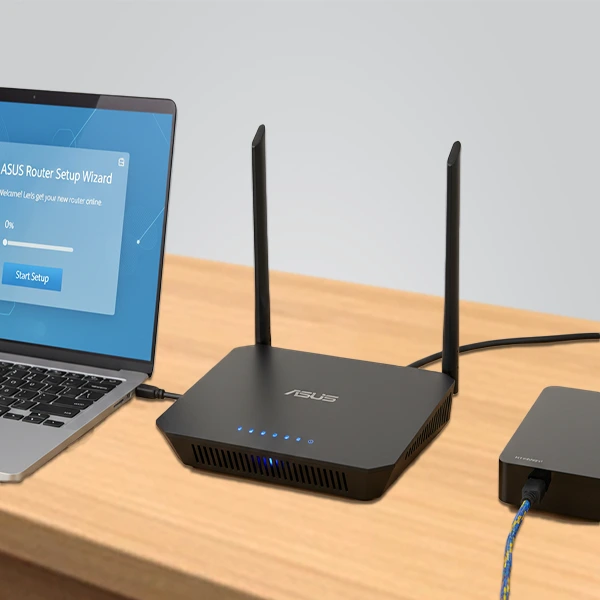
How to accomplish the Asus RT-AX58U AIMesh setup?
AiMesh, which enables you to use numerous Asus routers to form a seamless, mesh Wi-Fi network, is one of this router’s best features. This guarantees superior coverage in big houses or tall structures.
What You Require:
- A minimum of two routers (one primary and one or more nodes) that are compatible with AiMesh.
How to execute the Asus RT-AX58U AIMesh setup:
- Turn on the node router after placing it next to your main RT-AX58U router.
- Enter your RT-AX58U’s admin interface.
- Go to AiMesh to access the AiMesh Node.
- Click Search to find available routers.
- After choosing the router you wish to add, click Apply.
- Wait for the matching process to finish, which might take a few minutes.
For optimal coverage, you can relocate the node router to a different area of your home after joining. The network will function as a single mesh with a single SSID, intelligently managing traffic between routers.
How To Implement Asus Rt-Ax58u Firmware Update
Your router’s firmware must be updated for security, functionality, and performance improvements. Asus often releases firmware updates to fix bugs and offer support for new devices or technologies.
How to Update the Firmware on an Asus RT-AX58U:
- Use a web browser to access your router’s dashboard.
- Select Administration > asus RT-AX58U Firmware Update.
- To check if a new firmware is obtainable, click Check.
- Click Update if it’s available, then wait for the procedure to finish (do not turn off the router during this time).
- As an alternative, you may manually upload the most recent firmware via the admin panel after downloading it from the Asus support website.
- For extra convenience, the same menu allows you to activate automatic firmware upgrades.
Asus Rt-Ax58u Vpn Setup Benefits And Process
Your online activities are made more secure and anonymous with the use of a virtual private network, or VPN. PPTP, L2TP, and OpenVPN are among the VPN protocols that the RT-AX58U supports.
How to do asus RT-AX58U vpn setup in Client Mode:
- In the admin panel, select VPN > VPN Client.
- Select the VPN protocol by clicking Add Profile.
- Enter your VPN provider’s username, password, and VPN server address.
- Upload any OpenVPN configuration files that are needed.
- In order to connect, click Activate.
- For gamers or broadcasters, VPN Fusion’s ability to route just specific devices over the VPN while leaving others on the standard internet connection is ideal.
Advanced Features That Are Worth Examining
Pro AiProtection
- Trend Micro’s integrated security suite includes parental controls, infected device detection, and the ability to block harmful websites. It may be accessed through the router’s admin interface’s AiProtection tab.
Flexible QoS
- To cut down on latency and buffer periods, give gaming, streaming, or VoIP traffic priority. The QoS settings allow you to specify traffic priority.
Analyzer of Traffic
- Learn how much bandwidth is being used by each device or app, which can help you determine which devices are using the most data.
Network of Guests
- Make separate guest networks for guests while maintaining the security of your primary devices.
- You may set auto-disable timers and restrict guest access.
Convenience of Mobile Apps
For remote access and real-time monitoring, the ASUS Router App, which is compatible with iOS and Android, is a useful tool. You could:
- Complete the basic setup asus router.
- View the devices that are linked
- Block gadgets
- Restart your router.
- Receive alerts when firmware upgrades occur.
Tips for Troubleshooting
Not able to access the admin panel?
- Validate that the router is allied to your device.
- Now try 192.168.50.1 as well as http://router.asus.com.
- Try a new browser or clear the cache in your current one.
Slow Internet?
- Update the firmware.
- Restart the modem and router.
- Verify the QoS configuration.
- For devices that require speed, use the 5GHz frequency.
Can’t connect to the AiMesh node?
- Make that the most recent firmware is installed on both routers.
- Prior to pairing, reset the node router.
- During the first configuration, move the node router closer.
Final Thoughts
A remarkable router, the Asus RT-AX58U strikes a mix between powerful performance, cutting-edge capabilities, and intuitive controls. This router offers everything you need to create a safe and quick home network, from a simple Asus RT-AX58U setup to more intricate setups like AiMesh, firmware upgrades, and VPN setup.
The RT-AX58U meets the needs of both casual users wanting plug-and-play ease and tech enthusiasts seeking extensive customization. By using built-in tools, keeping up to date, and customizing your configuration to fit your needs, you can maximize your investment.
FAQs
How to connect to asus rt ax58u?
To finish the Asus RT-AX58U setup, plug the router in, connect via Ethernet or Wi-Fi, launch a browser, type router.asus.com, and then follow the configuration instructions.
Does the AX55 need a modem?
Yes, as the Asus RT-AX55 only serves as a wireless router and not a modem-router combo, it needs a separate modem in order to connect to the internet.
Can Asus RT-AX58U act as a primary AiMesh router?
Indeed, you may use the Asus RT-AX58U as the main AiMesh router and add other compatible Asus routers as AiMesh nodes to expand your network coverage.
How do I configure a VPN on the RT-AX58U?
To route traffic over the VPN, log into the router interface, choose VPN settings, create a VPN client profile, enter the information for your VPN provider, and then turn on the connection.
Can I use a third-party VPN service?
For safe, private network browsing, the Asus RT-AX58U does support third-party VPN services like NordVPN, ExpressVPN, and others that use OpenVPN or other compatible protocols.