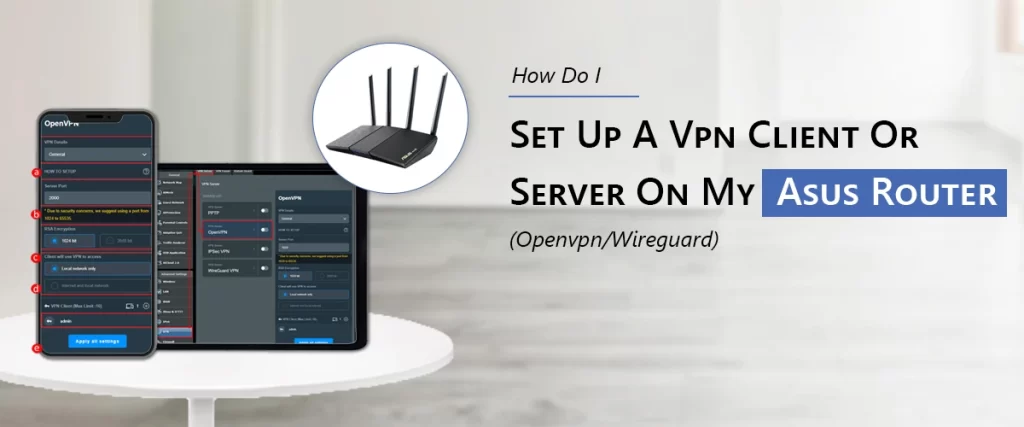
Securing your internet connection is more significant than ever in the current digital era. In addition to protecting your online activity, using a Virtual Private Network (VPN) enhances privacy and permits you to get around geo-restrictions. You’re in luck if you own an ASUS router since these routers include built-in VPN capabilities, such as OpenVPN and WireGuard, which makes setting up a VPN client or server simple. We’ll go over both ASUS router VPN setup and client setups, as well as typical troubleshooting techniques, in this tutorial to help you set up your ASUS router VPN.
Knowing the Difference Between ASUS Router VPN Server and Client
It’s critical to comprehend the distinction between an ASUS router’s VPN server and client before beginning the setup.
ASUS Router VPN Server vs Client:
- ASUS router VPN server setup: Your ASUS router serves as the endpoint when you configure a VPN server on it. This allows you to safely connect from any location in the globe to your home network. In effect, your gadgets outside of your house may connect to your network just like they would if they were physically there.
- VPN Client: Your ASUS router’s VPN client enables the router to establish a connection with a distant VPN service. This eliminates the need to install a VPN on each device as all of the devices linked to your ASUS router will use the VPN to tunnel their internet traffic.
Your needs will regulate which of these two you should choose. Use a VPN server configuration if you wish to access your home network from a distance. A VPN client setup is the best option if you want all of your devices to benefit from a commercial VPN service.
ASUS Router VPN Configuration: Required
Prior to beginning, make sure you have:
- An ASUS router that is compatible (the majority of ASUS routers support OpenVPN; more recent models include WireGuard).
- Your router has the most recent firmware loaded. You may authenticate this by logging into your ASUS router at router asus com.
- VPN server setup credentials or VPN configuration files from your VPN provider (for client setup).
- a reliable internet connection. Rebooting the router or doing a factory reset frequently fixes connectivity problems if your Asus router is not functioning.
Configuring Your ASUS Router’s VPN Client
All connected devices may take use of the VPN connection when your ASUS router is configured as a VPN client. Here’s how:
- Open the router’s settings: Go to router asus com in browser or type in IP address of your router. Enter your admin credentials to complete asus router login.
- Go to the VPN Settings: Navigate to VPN under Advanced Settings. The VPN Client and VPN Server tabs will be visible.
- Select a VPN client: After selecting the VPN Client tab, select Add Profile.
- Choose a VPN Type: WireGuard or OpenVPN are the most popular VPN services. Select the right choice.
- Upload Configuration File: Use your VPN service’s supplied.ovpn file to upload OpenVPN. You can import the.conf file or manually insert the WireGuard configuration information.
- Click Activate: Click Activate after saving the profile to enable the VPN connection. All devices linked to your ASUS router will use the VPN to route traffic when it has been established.
You have fine-grained control over your network traffic if you’re utilizing ASUS VPN Fusion setup, which allows you to even choose which devices utilize the VPN and which ones avoid it.
Configuring Your ASUS Router as a VPN Server
ASUS router VPN setup is the best option if you wish to access your home network from a remote area. Here’s how to accomplish it:
- Open the router’s settings: Log in by visiting router asus com.
- Go to the VPN server: Navigate to the VPN Server option under Advanced Settings > VPN.
- Choose the VPN Protocol: OpenVPN and occasionally PPTP (less secure, not advised) are supported by ASUS. Choose OpenVPN.
- Organize the VPN server: Arrange the VPN server by entering the necessary parameters, including the IP address of the server, client access settings, and encryption preferences.
- Export Configuration: To use the.ovpn configuration file on your distant devices, download it.
- Connect Remotely: To safely connect to your home network, import the.ovpn file into your OpenVPN client on your PC, smartphone, or tablet.
You may securely access files, printers, and other network resources from any location with an ASUS router VPN server configuration.
Solving Typical Problems of ASUS router VPN setup
Sometimes, even with the finest guides, things don’t go as planned. Here are some typical problems and solutions:
- Asus router not working: If your Asus router isn’t working, try restarting it and inspecting the cords. Do a factory reset and attempt configuring the VPN once again if the issue continues.
- Unable to get in to the router: Make sure the ASUS router is linked to your device. Use the router’s IP address or router.asus.com. If required, clear the cache in your browser.
- VPN connection drops often: Update the firmware on your router and check the reliability of your internet. Stability problems can occasionally be fixed by converting VPN protocols (from OpenVPN to WireGuard).
- Device-specific VPN routing problems: Make sure the right devices are allocated to the VPN or bypass rules if you’re using the ASUS VPN Fusion configuration.
In Conclusion
Your network security and flexibility are greatly increased when you execute ASUS router VPN setup, either as a client or a server. You may select the best configuration for your requirements by being aware of the distinctions between the ASUS router VPN server and client. ASUS routers provide reliable choices like OpenVPN and WireGuard, whether you want to safely access your home network from a distance or route all of your traffic through a VPN.
Your ASUS router may function as a potent VPN gateway, protecting the privacy and security of your online activity, with the right setup and the occasional troubleshoot. If you run into any problems, keep in mind that most of them can be fixed by going to router asus com and updating the firmware or doing a reset.
You will have a flawless ASUS router VPN setup if you follow these instructions, which guarantees security, privacy, and unfettered internet access for all of your devices.
FAQs
What is the difference between ASUS VPN Fusion and a standard VPN Client?
While a typical VPN client directs all network traffic over the VPN without allowing for per-device customisation, ASUS VPN Fusion enables selective device VPN routing.
How do I set up a VPN client (OpenVPN or WireGuard) on my ASUS router?
To connect successfully, visit router asus com, select VPN > VPN Client, upload the OpenVPN/WireGuard configuration file from your VPN provider, save the changes, and click Activate.
Why would I use a VPN server on my ASUS router?
With the help of a VPN server, you may safely access your home network from anywhere in the globe, safeguarding data and facilitating access to private files or devices.
Why is my ASUS router VPN not connecting or working?
Outdated firmware, improper VPN credentials, network problems, or setup flaws are a few potential explanations. To fix connectivity problems, restart your router, check the settings again, and update the firmware.